
Wheel of Names Explained: The Easiest Way to Pick Random Names Online
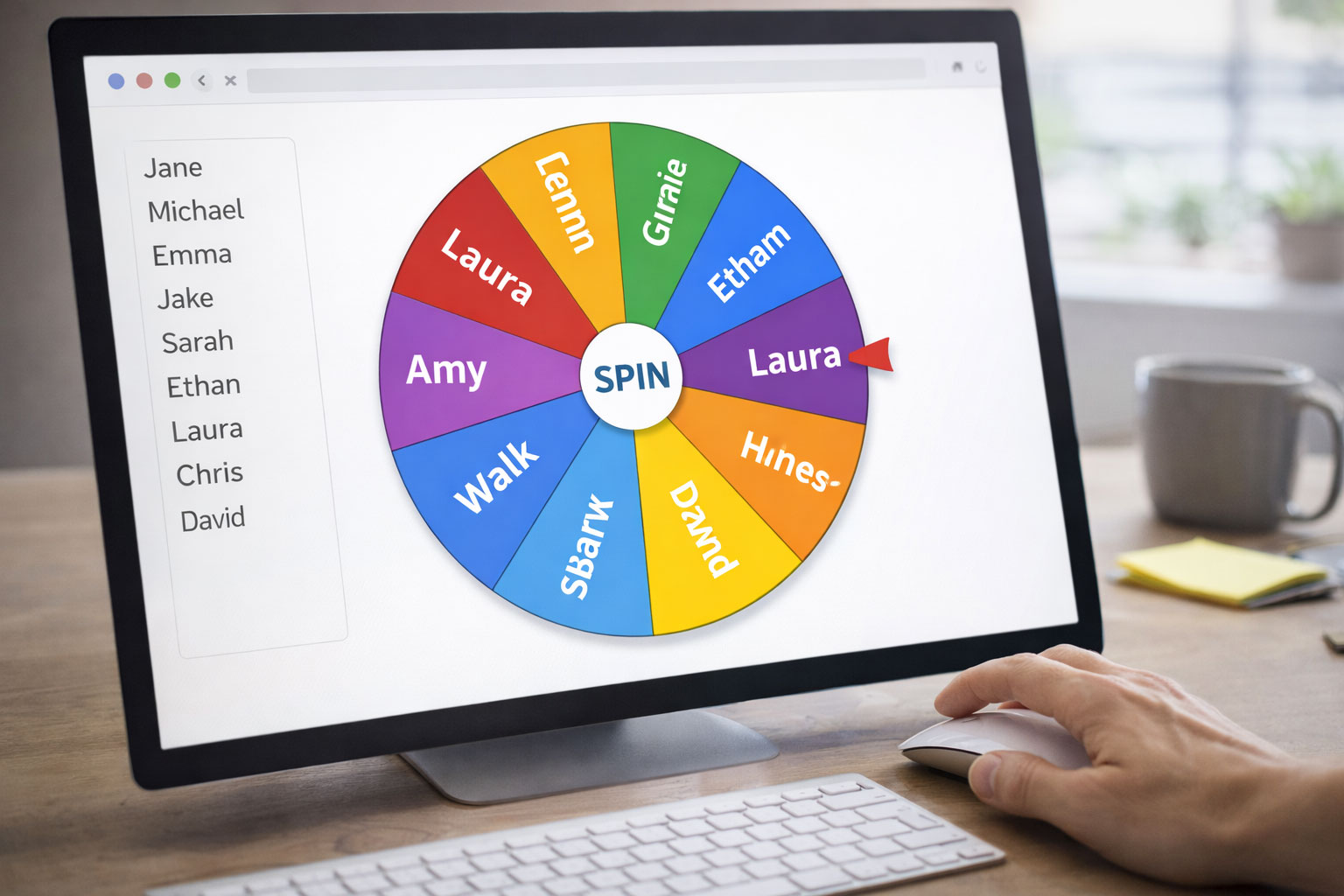
Discover how the Wheel of Names works and why it’s the easiest way to pick random names online for classrooms, games, and fair draws.
Let’s start with a very human truth: choosing people fairly is harder than it sounds. Whether you’re a teacher picking a student, a manager assigning a task, a streamer choosing a giveaway winner, or a group of friends deciding who goes first, the moment a human makes the choice, bias is suspected 😅. Even when you’re completely fair, someone somewhere thinks, “Hmm… interesting choice.”
This is exactly why the Wheel of Names has quietly become one of the most trusted and widely used tools for random selection online. It feels playful, but underneath that colorful spinning circle is a powerful idea: visible randomness that everyone agrees to trust.
In this deep, practical, and very human explanation, we’ll walk through what a Wheel of Names really is, why it matters, how it works, how to use it effectively, and how it turns awkward decisions into moments of shared fun 🎉. Along the way, we’ll blend real examples, metaphors, a simple conceptual diagram, personal experience, emotional context, and clear answers to niche questions people actually ask.
What Is a Wheel of Names? 🎯
A Wheel of Names is a digital tool that allows you to enter a list of names, display them as segments on a wheel, and randomly select one by spinning the wheel. When the wheel stops, the selected name is the outcome.
On the surface, it looks like a game. Under the hood, it’s a random selection system powered by algorithms designed to give each name an equal chance of being chosen, unless you intentionally change the rules.
What separates a Wheel of Names from a basic random number generator or list picker is visibility. Everyone can see:
which names are included
how many names there are
when the spin starts
how the result is chosen
That visibility is what turns randomness into perceived fairness, which is far more important in group settings than pure mathematics.
Why the Wheel of Names Is So Important ⚖️
Fairness isn’t just about being fair. It’s about feeling fair to everyone involved.
When a teacher points to a student, even randomly, the choice feels personal. When a manager assigns a task verbally, it can feel targeted. When a streamer picks a winner manually, viewers may question it. The wheel removes the human finger from the decision 🎡.
Here’s why that matters so much:
First, it eliminates social pressure. Nobody has to volunteer. Nobody feels singled out. The wheel decides.
Second, it reduces conflict. It’s hard to argue with a process everyone agreed to beforehand.
Third, it builds trust. Transparency creates comfort. People trust what they can see.
Fourth, it boosts engagement. Watching a wheel spin is surprisingly exciting. There’s anticipation, suspense, and a shared moment of focus.
In short, the Wheel of Names doesn’t just pick someone. It protects relationships.
How the Wheel of Names Works 🔄
Even though it feels simple, there’s a clear structure behind it.
At a conceptual level, the process looks like this:
Names entered → Names divided into equal segments → Randomization logic → Animated spin → One name selected
The animation is not just decorative. Studies around user experience and gamification consistently show that animated randomness feels more trustworthy than instant results. Seeing the wheel spin reassures people that nothing was pre-decided.
Here’s a simple mental diagram you can imagine:
Input list
⬇️
Random engine
⬇️
Spinning wheel animation
⬇️
Final selected name
The important thing to understand is that the random decision happens logically, and the wheel simply visualizes it in a way humans intuitively accept.
How to Use a Wheel of Names Step by Step 🧭
Using a Wheel of Names tool is easy, but using it well makes all the difference.
You begin by entering all eligible names. Accuracy here is critical. If someone’s name is missing, fairness collapses instantly. Everyone must be included before the spin.
Next, you review the wheel visually. Are the names readable? Are there duplicates? Is everything clear? This moment of transparency is part of what builds trust 👀.
Then comes the spin. This is where energy peaks. Let it spin naturally. Don’t rush it. That few seconds of motion creates anticipation and emotional buy-in.
Finally, you accept the result. This is the unspoken contract. The wheel only works if the group agrees that the outcome stands. Re-spinning “just because” weakens the entire system.
Real-Life Use Cases That Actually Matter 🌍
In classrooms, teachers use the Wheel of Names to select students for reading, answering questions, or leading activities. It removes anxiety, spreads participation evenly, and avoids accusations of favoritism.
In workplaces, teams use it to assign tasks, rotate meeting leaders, or decide who presents next. It turns awkward assignments into neutral outcomes.
In online communities and live streams, the wheel is almost a standard. Viewers trust it because they can see their names included and watch the process unfold in real time 🎥.
At home, families use it for chores, games, or choosing activities. “The wheel chose you” is easier to accept than “I chose you” 😄.
A Metaphor That Explains Everything 🎡
Think of the Wheel of Names as a fair referee in a friendly match. The referee doesn’t care who’s popular, who’s loud, or who volunteered last time. The referee simply follows the rules everyone agreed to before the game started.
The wheel isn’t the boss. It’s the neutral third party that keeps the peace.
Personal Experience and Emotional Insight ❤️
I’ve seen tension disappear the moment a wheel was introduced. Situations where people avoided eye contact, hoping not to be chosen, suddenly turned playful. When the wheel landed, there was laughter, mock drama, and acceptance.
The wheel didn’t just choose a name. It changed the emotional temperature of the room.
That’s the hidden value most people underestimate.
Frequently Asked Questions (FAQ) ❓
1. Is a Wheel of Names truly random?
Yes. Most tools use reliable randomization logic where each name has an equal chance.
2. Can I use it for serious decisions?
It’s best for agreed-upon or low-stakes decisions, not life-altering ones.
3. Can names be weighted differently?
Some tools allow weighting, but this should always be transparent.
4. Is it suitable for kids?
Absolutely. Children understand and enjoy it intuitively.
5. Does the animation affect the result?
No. The animation only visualizes the selection.
6. How many names can I add?
This depends on the tool, but most support dozens easily.
7. Is it better than drawing names from a hat?
Functionally similar, but more engaging and visible.
8. Can it reduce classroom anxiety?
Yes. It removes pressure and expectation.
9. Can it be used on mobile devices?
Most modern tools are mobile-friendly.
10. Is it fairer than manual selection?
Perceived fairness is almost always higher.
People Also Asked 🤔
Why do people trust wheels so easily?
Because randomness feels impartial when it’s visible.
Can a Wheel of Names be manipulated?
Only if the setup is dishonest. Transparency prevents this.
Why is it more fun than a list picker?
Movement and suspense trigger emotional engagement.
Conclusion: Simple Tool, Powerful Effect 🎯
The Wheel of Names is deceptively simple. It doesn’t shout. It doesn’t argue. It doesn’t explain itself. It just spins and decides.
But in doing so, it solves a very human problem: how to choose without hurting feelings, creating tension, or inviting doubt.
When used honestly and thoughtfully, it becomes more than a tool. It becomes a shared agreement to let fairness, chance, and a little bit of fun lead the way 😊🎡.