
Random Name Picker Wheels: Fair Choices for Games, Classrooms, and Giveaways
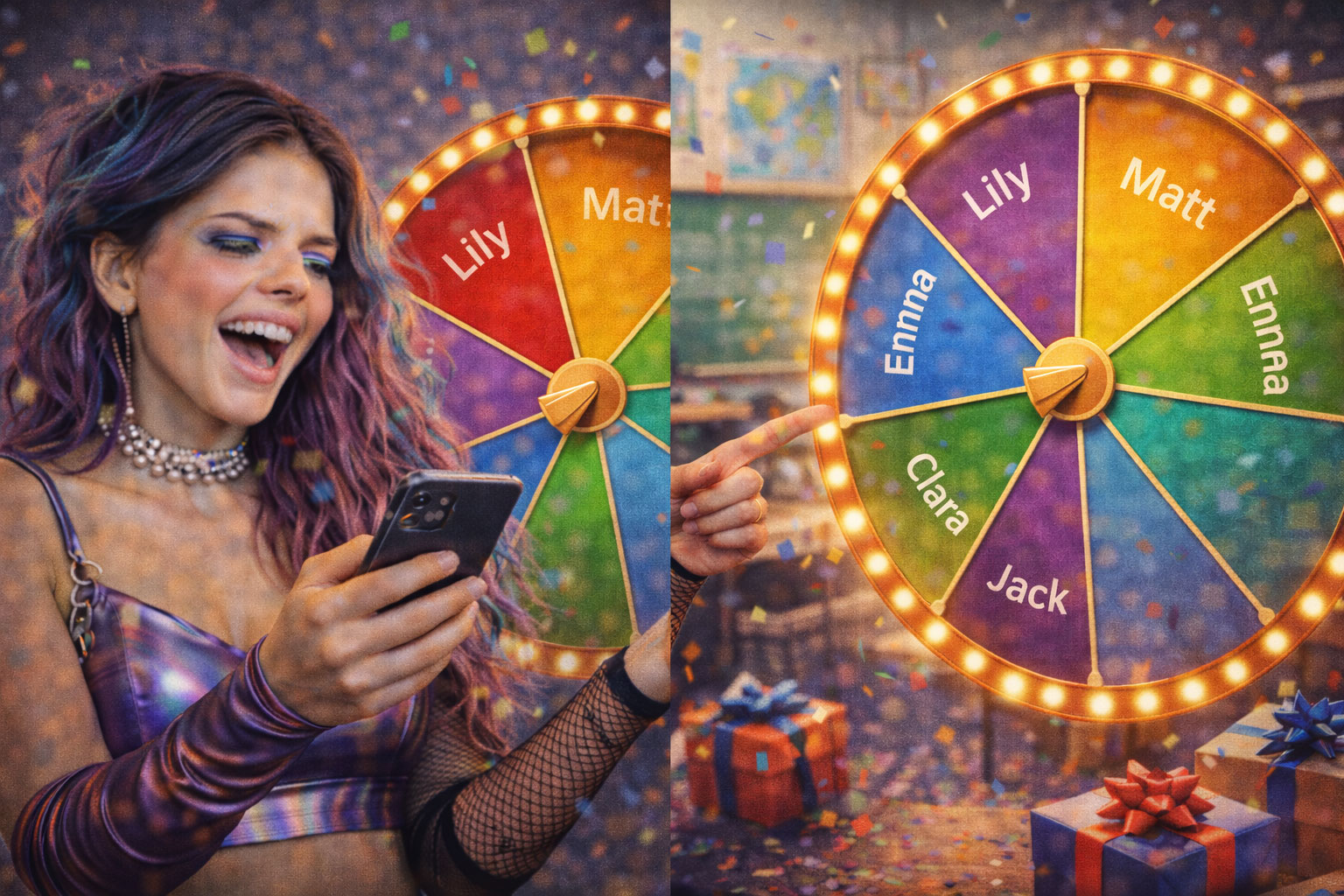
Use random name picker wheels to make fair choices in games, classrooms, and giveaways with transparent, fast, and engaging results.
If you have ever been in a situation where you needed to pick one name out of many and instantly felt the pressure of being “fair,” you already understand why Random Name Picker Wheels have become so popular 😊. Whether it is choosing a student to answer a question, deciding a winner for a giveaway, or simply picking who goes first in a game, humans are surprisingly sensitive to perceived fairness. Even when everyone agrees that a choice is trivial, the moment a person makes the decision manually, doubt creeps in. Was it biased? Was it random enough? Was it really fair?
This is exactly where random name picker wheels step in, not as a novelty, but as a practical, psychologically satisfying solution that removes tension, saves time, and makes the entire process more enjoyable 🎉. In this article, we are going to explore the topic deeply and professionally, while keeping the tone friendly and conversational, because this is one of those tools that works precisely because it feels human, transparent, and fun at the same time.
What Is a Random Name Picker Wheel? 🎯
A random name picker wheel is a digital tool that allows users to input a list of names and then select one at random using a spinning wheel animation. On the surface, it looks playful, almost game-like, but underneath, it serves a serious purpose: impartial selection. The spinning motion, the sound effects, and the visual segmentation of names all work together to create a strong sense of fairness and finality.
Unlike traditional random generators that simply output a name instantly, the wheel format introduces anticipation. That short moment while the wheel spins gives participants time to emotionally accept the outcome, which is a subtle but powerful psychological advantage. People are far more likely to accept a result when they can see the process unfold rather than being handed an instant answer.
Why Fairness Matters More Than We Think ⚖️
Fairness is not just a moral concept; it is a social lubricant. In classrooms, games, and giveaways, perceived fairness directly affects trust and engagement. Research in behavioral science consistently shows that people care as much about how a decision is made as they do about what the decision is. A transparent random process reduces suspicion and eliminates the feeling that someone had an unfair advantage.
This is particularly important in group environments. When a teacher, host, or organizer uses a random name picker wheel, responsibility shifts from the person to the system. The decision no longer feels personal. It feels procedural, and procedures are easier to accept 🙂.
Why Random Name Picker Wheels Are Ideal for Games 🎮
In games, especially casual or party-style games, momentum matters. Stopping to debate who goes first or who gets picked next can break the flow and dampen the fun. A random name picker wheel solves this instantly. Everyone sees the names, everyone watches the spin, and everyone accepts the result because it feels fair and exciting.
There is also an emotional bonus. The spinning animation builds suspense, which triggers a small dopamine response. Even players who are not selected stay engaged because the process itself is entertaining. Over time, this creates a shared ritual, and rituals strengthen group cohesion 😄.
How Teachers Use Random Name Picker Wheels in Classrooms 🍎
In educational settings, random name picker wheels have become a quiet revolution. Teachers use them to call on students, form groups, assign presentations, or even choose classroom helpers. The key advantage here is equity. Instead of relying on volunteers, which often favors confident or outspoken students, the wheel gives everyone an equal chance.
This approach also reduces anxiety. Students know that being called on is random, not targeted. Over time, this normalizes participation and encourages preparation, because anyone could be selected. Teachers often report that classroom dynamics become more balanced and inclusive when random selection tools are used consistently.
Why Giveaways Depend on Random Name Picker Wheels 🎁
Giveaways live and die by trust. Participants want to believe that winners are chosen fairly, especially in online environments where skepticism runs high. A random name picker wheel provides visual proof of fairness. Recording the spin or sharing screenshots of the wheel builds transparency and credibility.
From an organizer’s perspective, this also offers protection. If questions arise, you can confidently point to the process rather than defending a personal choice. The wheel becomes an impartial witness, and that is incredibly valuable in community management.
How Random Name Picker Wheels Work Behind the Scenes ⚙️
Most modern random name picker wheels use pseudo-random algorithms that distribute outcomes evenly across entries. While not truly random in a mathematical sense, they are sufficiently unpredictable for real-world use. The important part is not the algorithm itself, but the absence of bias. As long as each name has an equal segment and no weighting is applied, the result is fair for practical purposes.
The visual segmentation reinforces this fairness. People can literally see that each name occupies the same space, which strengthens trust even further.
A Simple Metaphor to Understand Their Power 🧩
Think of a random name picker wheel like drawing names from a hat, but with the hat turned inside out so everyone can see what is happening. Nothing is hidden. Nothing feels suspicious. The transparency is what makes the method emotionally acceptable.
A Personal Observation from Real Use 👋
In group workshops and online communities I have worked with, introducing a random name picker wheel instantly changed the tone of participation. Arguments about turns disappeared. Complaints about favoritism stopped. People laughed more. That alone tells you how powerful a simple, well-designed tool can be when it aligns with human psychology.
Practical Examples That Show Real Value 💡
In a classroom, a teacher spins the wheel to select a presenter. In a livestream, a creator spins the wheel to choose a giveaway winner. In a family game night, the wheel decides who starts. Each scenario benefits from the same core qualities: fairness, speed, and acceptance.
Frequently Asked Questions (FAQ) ❓
1. Are random name picker wheels truly fair?
Yes, as long as all names are entered once and no weighting is applied.
2. Can names be repeated on the wheel?
They can, but repetition changes fairness and should be used intentionally.
3. Are these tools suitable for young children?
Absolutely, they are intuitive and engaging.
4. Can teachers reuse the same list?
Yes, and many tools allow saving lists for future use.
5. Do students feel stressed by random selection?
Usually less stressed than targeted selection, because it feels impartial.
6. Are giveaway results trustworthy with a wheel?
Yes, especially when the process is visible or recorded.
7. Can the wheel be customized?
Most tools allow colors, sounds, and labels to be customized.
8. Is this better than a simple random generator?
For group acceptance and engagement, yes.
9. Does the spinning animation matter?
Yes, it increases anticipation and emotional acceptance.
10. Can wheels be used offline?
Some tools support offline or app-based use.
People Also Ask 🤔
Why do people trust spinning wheels more than lists?
Because the process is visible and feels transparent.
Are random name picker wheels biased?
Only if intentionally designed that way.
Can this method improve classroom participation?
Yes, significantly, by normalizing equal chances.
Do giveaway platforms require random selection?
Many recommend it to ensure fairness.
Is using a wheel professional enough?
Yes, when fairness and transparency matter.
Final Thoughts 🌟
Random name picker wheels may look simple, but they solve a deeply human problem: the need for fair, transparent, and emotionally acceptable decisions. In games, they keep things fun. In classrooms, they promote equity. In giveaways, they build trust. When used thoughtfully, they turn potential conflict into shared anticipation, and that is exactly why they continue to grow in popularity 😊.